Showing posts with label Karaivetti. Show all posts

Monday, March 03, 2008

My first Pratincole!

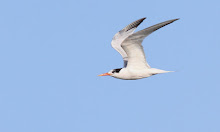
Today (March 2) Relton was coming out to Pullambadi to visit and he was supposed to be arriving around 10AM. For this reason I tried to hurry through the survey so I could get back a little sooner. I actually debated not going out as this was my seventh consecutive morning heading out and I was getting a little tired of it (especially after the day before hadn’t yielded much). I’m very glad I did though because I was rewarded with my first ever sighting of a pratincole! Pratincoles are technically shorebirds, but they appear to be sort of a cross between swallows and terns and are extremely long-winged and actually catch insects on the wing much like nighthawks or gull-billed terns. This is a family of birds (seven different species) that are found throughout the old world (Africa, Asia, Oceana, and southern Europe) but that do not occur in north or south america. Ever since I’ve been interested in birds, I would see photos of various pratincole species near watering holes in Africa or see them flying around in the background of discovery channel specials on large mammals in Kenya (yes if you are hardcore enough, bird-watching will have you closely examining any and all videos and photos for any inadvertent capture…there’s no on/off switch…). There is a species of pratincole that is a resident bird in the Indian subcontinent, the Small Pratincole, that had been recorded at Karaivetti in the past but I had not been able to find this particular species despite constant vigilance. Imagine my delight when I looked up, (from my daily search for the crakes) in response to an odd shorebird call, to see a pratincole flying over! I knew that this bird wasn’t the species that I had been expecting because there was too much chestnut on the underwings and the Small is basically black and grey. Two more pratincoles of the same species called and flew over me on their way over the lake following closely behind the initial bird and I rushed to my backpack to grab the field guide to check which species this was. The only other species that was reasonably expected was the Oriental Pratincole which is not common in the southern subcontinent, but they regularly winter in Sri Lanka, so they are transient migrants throughout the rest of the region. Another species, the Collared Pratincole looks similar to the Oriental Pratincole but is quite a bit smaller. This would also be a much rarer record. While they do breed near Pakistan, there are only a smattering of records throughout the rest of India and Sri Lanka. I was fumbling through the field guide and finally got to the page just in time for another two pratincoles to fly over. By their size (similar to the very common Whiskered Terns) and their lack of any white on their wings, I was able to determine that they were definitely the more likely Oriental Pratincole, a new species for me and for Karaivetti! Unfortunately I was unable to get photos of this sharp looking species, but this one so impressed me that I'm going to send you to another site to see this species - gorgeous bird!
Later in the day I finally saw a Pied Harrier as well, a species that while not abundant, occurs in small numbers in the more open grasslands and cultivated areas of the subcontinent. Best photo I have to offer is of the much more common Eurasian Marsh Harrier which I typically will see 6-8 of in a morning there (left). A different individual Ruff was present at the other lake, only one prior record excluding my sighting of 24 several days ago. I was able to get some video of the bird as it sat and preened through my scope, but it was beyond the range of still photos.
I didn’t realize it at the time, but this actually was my final day conducting the survey at Karaivetti. Relton and I are going to be going up to Valparai in the Western Ghats tomorrow for three days of birding the humid rainforest (should see some nice endemics and other specialties). I will then be back in Trichy for a single day and leave for Thailand on the 8th. So I spent the afternoon packing up my stuff and getting ready to leave Pullambadi and my gracious hosts and new-found friends.
We actually returned to Trichy via some grasslands and open scrub habitat in an attempt to locate Eurasian Thick-Knee and possibly sandgrouse. We struck out on both counts, but did have some nice looks at Small Minivet, Short-toed Snake Eagle, and White-eyed Buzzard (on right).

Shorebird bonanza!

While you weren’t able to read my last blog post due to some difficulties with the telephone lines here, my final sentence ended up being prophetic as today (Feb. 29) I definitely saw good diversity and decent numbers of shorebirds for the first time in a month of conducting this survey. I ended today with 20 species of shorebirds represented by a grand total of 322 individuals. The most noteworthy species of these were probably Broad-billed Sandpiper (6), Curlew Sandpiper (11), and Ruff (24) which had all been recorded on just one prior occasion. They are definitely not common at this inland site, but I think that when the habitat is suitable, like this lake is at the moment, they are probably fairly regular migrants through the area. The Broad-billed Sandpiper was doubly exciting for me though because it was the first time I’d ever seen this species! Larger shorebirds were observed roosting on islands in mixed flocks (Black-tailed Godwit, Black-winged Stilt, Common Greenshank, and Marsh Sandpipers). Three species of plovers were present along with both Little and Temminck’s Stints.
The species total of 20 species is quite good and I can’t think of too many occasions when I have recorded this many species in one day. To put this total in perspective, here are my best recollections of my highest personal single day tallies of shorebird species from each significant birding locale I’ve been to; 17 in coastal Norfolk, UK during March, 20 at Point Calimere, Tamil Nadu (a coastal site so more expected), 21 in coastal Ecuador in January, 24 at the Salton Sea in CA during Aug, ~25 is my highest in WI in mid-May, and ~30 on the upper coast of TX during late April. All of those totals represent solid day’s worth of effort to find that many species and with the exception of Wisconsin, they all involve salt or brackish water.
The rest of the day was fairly uneventful but I relocated the wagtail flock and something flushed the group and they all landed close to each other allowing for 14 of the birds in one frame (below)! Unfortunately, the distance involved with most of these shorebird species prevented me from getting even semi-decent photos, I can offer a shot of the habitat with a flock of Black-headed Ibis probing the deeper water/muck (opening photo). This sort of edge is present around about half of the lake and this is where the majority of the shorebirds are located.

Sunday, March 02, 2008

Wagtail congregation

[Note - due to some technical difficulties including more prevalent brown-outs than normal, the phone line rusting through, and an earlier than expected exit from Pullambadi, I have been delinquint in my blog posts. I apologize. This post was written on the 28th...]
Today was fairly standard day with no truly noteworthy species being noted (and I didn’t see my “reliable” crake after I quoted the high percentage of success yesterday…). The highlight for me was a flock of ~20 Yellow Wagtails I noticed foraging in a series of freshly harvested rice paddies. There were local villagers still working fairly close to where the wagtails were and the birds seemed semi-oblivious to the precence of people, so I thought I had a good chance of getting some good photos of the species (which I hadn’t had any luck photographing up to this point). I vaulted the acacia thorn poor-mans fence (piles of extremely thorny branches placed around fields to keep out goats and cows) and made my way out the bund to the edge of the wagtail flock. I then sat down and waited for the birds to get close. After about fifteen minutes several of the birds had made their way sufficiently close to me that I was able to get some pretty good photos of this highly variable-plumaged species. There are three different ages with identifiable differences in plumage (hatch year, second year, and adult), each gender also looks different at every one of these ages. Add in the fact that there are at least seven different subspecies present during the winter in India and variability in plumage that appears to rival gulls, identifying these birds to age and subspecies is proving more than I’m up for! I am getting more comfortable identifying wagtails at least to species, but thus far I’ve only been dealing with Grey, Yellow, Citrine, and the very different looking resident White-browed. This year I haven’t seen any of the White Wagtail complex that seems to be alternately split into several different species and then re-lumped back into subspecies every few years on both sides of the Atlantic (the Brits and Americans have different listing authorities…go figure eh). All this preamble is just to give some sort of an idea of the complexity of this species group. At the same time, I have to say that I’m quite a fan of wagtails in general. Their behavior, calls, and plumage all are fairly unique. They appear similar to the pipits that I’m accustomed to in some respects, but they are much more vividly marked. They also apparently gather in fairly large flocks during migration (roosting in reedbeds like swallows). I’ve only had the good fortune of observing one such large flock (in excess of 400 birds), which I observed flying north fairly high up over a vantage point near Kamaraj Dam in the foothills of the Western Ghats last year. The flock of Yellow Wagtails I observed today is thus actually the largest flock I’ve noted where I was actually able to study the birds. Their habitat preference I noted was quite a bit different from the Grey and Citrine Wagtails I’ve been seeing with some regularity along the margin of the lake. These birds were foraging in dried out paddy field among dried stalks of rice. Perhaps this apparent propensity for drier habitat has been part of the reason I haven’t seen too many Yellow's thus far.
I actually do not have the guide to wagtails (yes they most definitely merit their own field guide!) and the India and Thai guides I have here really don’t do the various subspecies justice… Here are three different individual Yellows I was able to photograph this morning though. Any thoughts/comments as to the age/gender/subspecies of these birds would be most welcome! Side note: the third bird pictured I'm unsure of, it may be a Grey Wagtail, but I think the fact that it has a yellow throat puts it more firmly in the Yellow camp. I could definitely be wrong though (on right).
Alan had the misfortune of developing a puncture today so he was only with me for the first hour or so of the survey before he went into the village of Karaivetti to have it patched. He had ridden on the bike too long before he noticed the flat and there were too many holes to actually just patch it. So a new tube was driven in from Pullambadi by one of the drivers at the school. This took the better part of the morning and I didn’t see him again until I returned to Pullambadi at 12:15PM. The water level is rapidly dropping at the other lake and I think I might actually see some interesting shorebirds there before I’m finished with this survey.

Wednesday, February 27, 2008

Eurasian Sparrowhawk and an unexpected visitor

Today there was a nice breeze and I knew it was going to be a more pleasant day to be out, little did I know that the birds would also provide some additional enjoyment. We began our survey at what I’ve begun to call “crake corner” and were able to have nice looks at one and possibly two Baillon’s Crakes (I’m batting 86% on that bird over the last seven days I’ve been out there). Continuing on to the tower we were enjoying our breakfast and counting arriving and departing birds when I heard Blue-tailed Bee-eaters give a rapid alarm call and watched four of them blast past our second story vantage in the tower. I suspected a raptor was present and sure enough, a moderate-sized accipiter was soaring over the edge of the water near a grove of palms and acacias where the bee-eaters had fled from. As soon as I saw this bird I knew it wasn’t the numerous Shikra (the local default accipiter) due to its slightly larger size as well as its darker and more prominent barring underneath the body and tail. I also was able to see the throat well which was clean white on this subadult bird. After the bird had passed along I checked the guide to see if my hunch (Eurasian Sparrowhawk) was correct. The only other possibility, subadult Besra, was eliminated due to the barring on the breast (Besra has streaks) along with the clean throat (Besra has a strong “gular stripe” – central throat stripe). This species is rare in southern India, but not totally unprecedented according to the range maps (a dangerous thing to rely on here!). I’ve also observed Eurasian Sparrowhawk on at least a dozen occasions in the UK and I’ve observed the previously mentioned Besra in the Ghats a handful of times.

We had moved along and were about to leave the second to last stop when a car pulled up along the only road that actually intersects the lake and I was surprised to meet K. V. Sudhakat, a birder from Chennai who had been reading my blog and had taken a slow day at work and driven down to Trichy (about an 8 hour drive…) with several of his co-workers to see Karaivetti and to meet me! It was extremely fortuitous timing as Alan and I were about to leave when he pulled up. Anywhere else along our route it would have been next to impossible for someone in a car to have rendezvoused with us (and I also didn’t know to expect him!). We talked for about 45 minutes, I showed him the ashy-crowned sparrow lark nest and we saw fairly routine things (Osprey [on left], Yellow Wagtail, along with only my second sighting of a couple Red Avadavat’s) while we chatted. He was hoping that I would be leaving via Chennai and I could stop by a local nature club to speak before returning to the US. Unfortunately I’ve already purchased my airline tickets to Bangkok out of Trichy via Sri Lanka, so this would be logistically impossible for me… It was still nice to meet another birder in a country where they are truly the exceptional find though!

The rest of our survey was fairly uneventful but I did see an Alpine Swift over the other lake (my third sighting this year…only one prior record). I also noted only my second Common Kestrel during the twenty-two days I’ve been conducting this survey, remarkable in their absence. One other note of interest, the male Ashy-crowned Sparrow Lark was seen brooding the eggs today. I’m not sure if this has been noted for this species before but this is fairly unusual in most north american passerines (songbirds).

Over the past few days I’ve been devoting more of my attention behind me as I’ve had a second bike to worry about since Alan has been accompanying me. I’ve noted with dismay that both of our bikes seem to share an unhealthy appetite for oil (and I promise you that neither of these bikes have any ties to Halliburton or Dick Cheney). Apparently these bikes could use a tune-up, or possibly need to be retired as I feel confident that my moped is at least as old as I am (Alan’s bike looks to be at least a decade my senior). At the same time this makes me feel comfortingly more a part of the global community. Mixed emotions…

I also would like to take this occasion to share a nightly part of my stay here which involves me going through the old kitchen (that I normally keep closed up) on my way to the “shower” (bucket of hot water mixed with cold tap water dumped over my head). As I open the door and shine my light (usually a candle since this typically takes place during the daily 6-8pm power outage) in the room I hear mass scurrying as a very healthy population of cockroaches all head for cover. I got to test out the macro lens on Relton’s camera on a particularly friendly individual earlier this week. I don’t think it would be fair for me to show you nothing but the avian wildlife that is present in southern India! Yes, I shake out my sheets and clothing every night/morning before I put any of it near my skin! I can’t think of a better way to end this post, so until tomorrow!

Tuesday, February 26, 2008

Rosy Starlings

After being skunked on a species that was listed as common on the site checklist for the past four weeks, I finally found Rosy Starlings at Karaivetti today. As a matter of fact, I found three flocks today totaling 78 birds. Apparently the old adage “when it rains it pours” holds true here in south India! The opening photo was taken this past weekend near Calimere where Rosy Starlings were quite numerous. This was the 176th species that I’ve observed here at the sanctuary of the 208 species that have ever been recorded.

Relton’s son, Alan who is a first year Zoology student at Bishop Heber College in Trichy has decided to skip classes for several days and accompany me on the survey. Today he took great pleasure in the close-up looks we got of a Baillon’s Crake that had eluded his dad last week. We also saw over 380 Bar-headed Geese today, but I was unable to locate the wayward greylag among them. The rest of our count was rather uneventful, we did have more flocks of shorebirds depart and give us flybys than normal (11 Marsh Sandpipers, 25 Common Greenshanks, 9 Black-tailed Godwits, and 5 Little Stints). While investigating the edge of several reedbeds I noticed a nest in the nearby scrub with two eggs whose tenants were given away by the agitated pair of Ashy-crowned Sparrow Larks (male below) that were nearby. I haven’t found that many nests thus far, but I’ve seen a fair number of young birds and adults carrying food or nesting material.

On the return trip to Pullambadi I was amused to watch in my rearview mirror as Alan attempted to overtake a gravel truck that I had already passed only to have his moped max out at the same speed the truck was going. His moped also doesn’t have rearview mirrors, so he hadn’t realized that a bus had been rapidly closing in on him! He definitely looked like a small fish in a big pond sandwiched between those two large vehicles! He safely was able to get back to the left and allowed the bus to pass, no worries.

The children at the school here have become sufficiently accustomed to my presence that they are now calling out my name every chance that they get. My name is typically pronounced here as ‘shohn’ – lacking the ‘w’ that isn’t represented in the spelling, hence confusing for most here. Whenever I respond to my name being called it is 9/10 to get only a “hi” as they aren’t confident enough in their English to say more than this. But they definitely want me to know that they know my name!

Friday, February 22, 2008

Another new raptor!

I did the survey in a different order today in an attempt to have a more representative sampling of the areas that normally I’m not getting to until after 10AM (less activity among many songbirds this late in the day). I didn’t see anything remarkably different during this part of the survey, but I did see a Watercock and more waterhens than usual probably due to the earlier hour I was there. I also got a nice photo opportunity of a cooperative Pied Cuckoo during the prime early morning light (below). This is a species that is a brood parasite and lays its eggs in other species nest’s for them to raise (much like the cowbirds do in the Americas). Almost all of the old world cuckoos and their close relations (Asian Koel) do this.


Continuing on my way I drove more slowly along the wooded section of the river/canal that enters Karaivetti Lake. My slower approach was rewarded by a brief observation of an Ashy Drongo. This is a species that has been recorded once at the sanctuary before, but it is uncommon in the lowlands primarily due to a lack of shaded woodland habitat that it prefers (it is the most abundant drongo up in the Ghats). The opening photo is a more artistic capture of the much more abundant Black Drongo that I took at the observation tower last week. The Ashy differs from the Black in being a more slate grey color with a bright red eye. The Ashy is typically found perched on the interior branches of a tree while the Black Drongo will perch out on wires and any sort of exposed and open perch.


A brief stop at the rail location garnered me looks at a Baillon’s Crake again…of course I saw this species on both days surrounding Relton’s visit. I was grateful that the greylag goose at least didn’t rub salt in the wound by not appearing today despite almost the full contingent of Bar-headeds being present (221). The rest of my survey was slow but as I was leaving I watched a Brahminy Kite that had been asserting its dominance over literally everything in the area (including openbill storks and ibis!) begin to scream and climb up towards a very long-winged raptor that was soaring above me. I hadn’t noticed this bird prior to the Brahminy Kite alerting me of its presence and a quick look through the binocs revealed that this bird was a subadult Bonelli’s Eagle, a species that regularly occurs in the plains, but that had never been recorded at Karaivetti before. I actually had seen this species at least three times last year, but this was my first observation of the species this year.

I caught the 3PM bus from Pullambadi to Trichy and had the privilege of being on a bus that was showing some of the latest films on dvd. Apparently police/military brutality isn’t something that is frowned upon here. Most of the scenes that seemed to illicit the most admiration from my fellow travelers were the scenes where one military officer was beating some hapless soul senseless. I honestly was trying not to watch the TV but every one of these beatings was signaled by an almost disco dance beat while the special effects people went nuts with slow motion. I don’t mean like Matrix slow motion or wire-foo, I mean just normal slow motion to a man being utterly battered. Yeah forgive my lack of enthusiasm; I’m accustomed to movies like Fight Club where the fighting actually has some sort of purpose…wait. Okay maybe I can’t claim the moral high ground here, but regardless I was not overly impressed.

Thursday, February 21, 2008

A visitor and 0-3 on the main attractions…

It’s days like this that make one pessimistic. Relton woke up very early and joined me for the survey today in order for him to see several of the unusual species that I have been seeing over the past week (Greylag Goose, Gadwall, and Baillon’s Crake). As my subject line indicates, we struck out on all of these species despite me being 4/5 and 3/5 over the past five days on the two he hadn’t seen in Tamil Nadu before (the goose and crake). I guess this just underlines the fact that one never knows what will see when you go out into the field. Perhaps this is part of the mysterious attraction that birders have to the hobby. I did use his local expertise to help me iron out the differences on the bushlarks that I have been struggling with and this was very helpful. All three confusing species were present today, thus giving ample opportunity to compare and contrast. The song and display flights are one of the biggest clues to the species.

Otherwise today was really a bit on the routine side (if you can species like the above Eurasian Golden Oriole routine…). White-browed Bulbul was a repeat, an Asian Paradise Flycatcher was a pleasant surprise, and we got a good opportunity to study (and photograph) a snipe near the observation tower while we waited for the greylag that never came… We decided that this bird is probably a Pintail Snipe due to the very wide buffy supercilium that is wider than the dark eyeline that comes out from the beak (yes this is one of the only differences between this and the very similar Common Snipe…yikes!). Snipe are usually very hesitant to allow close approach so I cautiously approached this bird under the cover of a stone wall until I knew I was within 20 feet of the bird. I then crawled on my hands and knees and actually stuck the camera around the corner of the wall without actually showing the bird any part of my body other than my trigger finger and found the bird using the large lcd screen on the Sony Cyber-shot. I wish someone could have taken a photo of me getting this photo because I felt pretty hardcore!

I also enjoyed the company of a native speaker as the amount of curious onlookers that felt the need to visit me was greatly dissuaded by the simple presence of someone who spoke Tamil… I also got to learn what may seem to be an intuitive lesson that exhaust pipes on motorcycles can get hot! We had taken a full size bike since there were two of us and the scooter I normally take is a bit underpowered for two men. I definitely have a nice souvenir on my right leg from my momentary lapse of attention. Yet another lesson learned; you won’t see me getting off the right side of a motorcycle again anytime soon!

I will be conducting the survey again tomorrow morning and then taking the bus into Trichy where I will depart with Relton and his family for the weekend at Point Calimere on the coast where we should see many waders.

Wednesday, February 20, 2008

Non-feathered fliers

Today the highlight of my day didn’t come in the form of any avian novelties (despite a good day) but instead occurred during my drive back to Pullambadi from Karaivetti Lake. I was on the final 4 km stretch that is much busier and has truck and bus traffic and I was keeping an eye on a small tricycle-truck (I know this sounds like it is literally impossible combination – but it is totally possible here!) that was rapidly closing on me in my rear-view mirror. Sure enough, it honked its courtesy warning that it was passing me (duly appreciated) and accelerated past me. Apparently this particular driver wasn’t that familiar with this road, because he definitely choose the wrong location to slingshot around me! We were fast approaching a series of three speedbumps that had just been added five days prior. The middle speedbump actually more closely resembles a small ramp it is so large. I had already begun braking when he honked and I totally knew what was going to happen and watched in amazement as this “tryke-truck” launched off the middle speed bump going at least 60kph and caught a good foot of air under the tires! He actually almost cleared the third speedbump, and I honestly thought that little truck was going to fall apart it rattled and banged so much upon landing… I then struggled to maintain control of my own scooter as I was laughing so hard at the seemingly impossible event I had just witnessed! The next speedbump a km up the road the vehicle slowed down for…

So yeah, the birds today seemed slow, but I actually topped yesterday’s tally by four species for my best day yet (122)… I don’t know why it seemed slow, maybe I’m just getting used to everything I’m seeing. A few interesting waders were seen including four Painted Storks that gave me a nice flyby (see photo below), I also had only my second sighting of Glossy Ibis today (2 birds), along with a pair of Lesser Sandplovers (formerly Mongolian Plover) that I can thank a male Pallid Harrier for flushing up past the tower. Probably the best bird of the day was a Grey-bellied Cuckoo that is only the second record for the sanctuary (and a new species for me). The water levels at the lake are actually back up to the same level they were at the end of January… This is good for the ducks but not good for the waders that I was hoping to be seeing higher numbers of by this point. All the shorebirds I see are either flybys or perched on the extremely distant small islands out under the rookery. Black-winged Stilts are literally about the only species I can ID at that distance. Yesterday I lucked out and had a pair of the stilts actually foraging on top of floating vegetation (like a jacana) right by the dike. Here’s a shot of a sharp looking adult male (black back rather than brown on female and immature birds) on the right. I didn’t relocate the Gadwall because all the ducks at the other lake were roosting on the opposite shore far beyond the range of my scope.

Tuesday, February 19, 2008

Another rarity...

And the species is…Gadwall (and no this isn't a gadwall pictured above...it's an Indian Pond Heron). I find it mildly amusing that I’m finding waterfowl that are really fairly rare in this part of India, but that I’ve seen literally thousands of in either the UK or the US (just like the Greylag Goose). I could just as easily be finding species like Falcated Duck or Bean Goose that would be probably equally rare as what I’ve found, only extremely novel to me, but no…Gadwall and Greylag Goose! Gadwall actually isn’t a new species for Karaivetti, there is one record from 1988 as well. I did find one new species for the sanctuary (and me) today (#207) which appeared in the form of a Red-necked Falcon that zipped along over the rice paddies bordering the dike and did a loop past the shorebird spot probably hoping to surprise one of the fifteen or so shorebirds that are usually present there. This falcon is probably overdue to be recorded here as it is a fairly widespread resident of open areas throughout the subcontinent. It is slightly larger than a Merlin with a yellow cere (the area behind the beak) and a reddish wash across its crown and shoulders on an otherwise fairly grey body with dark primaries. Falcons are generally very impressive birds and this species was no exception. This bird also represented the 300th species that I’ve observed in India, I’m glad it was a novelty instead of 301…Gadwall!

A couple of Red Avadavats were also my first in India (I’ve seen them in Hawaii where they are introduced just like the majority of the passerines there). Several shorebirds were also of note today including a lone Common Greenshank, two flocks of Black-tailed Godwits totaling 17 birds and a flock of ~80 Pacific Golden Plovers that I observed in flight at the other lake I check. I also think that I have the rail’s number as I saw two Baillon’s Crakes, a Ruddy-breasted Crake, a Slaty-breasted Rail, and a Watercock this morning all within a half hour of each other (normally all very difficult to see). Today was definitely a good day but for some reason there were a number of species that I had seen every single day up to this point that I inexplicably missed (Green Bee-eater, Bay-backed Shrike, Rufous Treepie, and Indian Robin). Despite this, I recorded my highest single day total of 118 species today. It’s days like this that keep me motivated to keep coming out to what are most likely going to be the same birds…

I’ve been watching with interest the behavior of Brahminy Kites as they course over the lakes. This is probably the most common predatory bird present and I’m amazed by the variety of prey I’ve observed the species eating or attempting to catch. These birds are a little smaller than Red-tailed Hawks (more like Red-shouldered Hawk size) but I’ve witnessed them carrying fish that are over a foot long! Most of their prey seems to be smaller fish, snakes, frogs, lizards, palm squirrels (chipmunk sized), and small birds. I’ve watched them stoop on young coots several times but the adult coots go crazy and the young birds dive under water but I’m sure they catch one occasionally. The most impressive catch I’ve witnessed definitely goes to an adult Little Grebe that I watched being carried away still squawking by an adult kite…this grebe is comparable in size to a Pied-billed Grebe and I would have thought that these guys wouldn’t have to worry…apparently this is not the case! Here’s a photo of an adult Brahminy Kite in flight (left) taken near a stand of palms where I suspect a pair are nesting.

Also, the opening photo is of an Indian Pond Heron, a species that is present at literally every habitat where there is even a hint of water. They are quite impressive in flight as their entire wings are entirely white. Apologies for the lack of pertinence to this entry…I don’t have any good photos of any of the species that I was describing earlier… And I tested out the macro mode on the Sony Cyber-shot on this sharp looking dragonfly the other day as well (perched on the camera strap below!). If only birds allowed me to get the camera within 3 inches of them!

When fueling up the moped this morning I was grateful that the same attendant didn’t demand a tip, so I offered him one. I was vindicated in my earlier refusal when he emphatically refused it due to another attendant’s watchful eye!

Since I have been watching more cricket on the tele the boys I play with every evening have realized that they can’t tell me whatever they feel like with regard to the rules! Due to the constraints of the size of our pitch, we play what I would liken to half-court cricket. Normally the batter can actually hit the ball behind him (as long as it doesn’t hit the wicket) which really opens up the field of possibilities while batting. My bowling is erratic at best (that whole one-bounce thing makes things a lot more tricky), although if they let me actually throw (which some of them do) I’m money!

Another observation of a cultural difference between America and India; in America paved roads serve as places for vehicles to travel along, telephone wires to be strung along, and hazards for wildlife to cross. Here those same functions are fulfilled but roads are seen as having many more purposes than what we restrict our roads to in America. For example, roads apparently are the preferred areas to lay out various grains (predominately rice but several others that I don’t know the name of) and have the buses and vehicles that traverse the road do the threshing of the seeds for them! And no, the fact that the rice is bound for human consumption does not mean that it will be listed under some sort of “seconds” or bargain price as a result of this treatment! The fact that hundreds of goats and cows pass along these roads daily (defecating as they go), not to mention vehicles that have never been introduced to an emissions test, doesn’t seem to faze these folks! The rice fields are all being harvested at this time (see photo), thus my observation of their use of the roads…

I’ve also been impressed by the truckers fastidious efforts to extend the fuel efficiency of their vehicles by removing or cutting off their mud-flaps! I can’t even begin to think about the vast quantity of petroleum that is saved by this reduction in the weight of all trucks nationwide (perhaps this would be a good thing for America to suggest as a meaningful solution at the next global climate summit!). I feel confident that the glass lobby here is a force to be reckoned with though. The untold amount of dollars (sorry rupees) spent on replacement windshields for the vehicles traveling behind these trucks due to large chunks of gravel that are tossed up also must function as a boon to the economy (another thing that should be considered as a potential shot in the arm for the US economy). The reality of this situation is that I have to be extremely careful when traveling behind the gravel trucks that frequent 4 km of my daily route. I thought taking beetles to the face was bad!

In case you didn’t notice, the sarcasm is getting a bit pent up as it doesn’t transcend cultural boundaries well so I have to restrain myself here… All for today - maybe tomorrow I’ll find a mega rarity…like a Mallard!

Monday, February 18, 2008

Leave No Lark Behind

While out in the field this morning, with perhaps too much time on my own with no one to talk to, I decided to name my renewed examination of the various species of larks present after the US Education system’s catch-phrase of a similar title (child and lark obviously switched). I don’t recall who actually coined this phrase, but since I can’t accredit a single person I’m going to give the acolytes to the US Education system (and honestly I think it can use all the praise it can get these days…but that’s another story). Anyway…I drove the dikes around the lake much slower today and was stopping and checking every lark that I saw (probably ~30 or so today). After thinking I had figured out most of the key field marks yesterday when I noted predominately just Oriental Skylarks and Rufous-winged Bushlarks, I realized that I definitely don’t have them all figured out yet! I saw two birds today that I honestly am not sure what species they were. Since the degree of rufous that is shown in the primaries is supposedly a great (and easily seen) field mark, that’s what I’ve been trying to key off of (and since hind claw length is kind of ridiculous to easily see…). The larks seem to enjoy discarding the myth that this is a reliable and easily seen fieldmark. Whether they have their wings folded in such a way that you actually can’t see the primaries while they are perched, or are so worn that you can’t tell if the color that I’m noting is really what is represented in the field guides I have. I really could use a “Bushlarks of the World” in depth guide or something like that. I bet there is one, but I definitely don’t have it here… Anyway, I did finally get a photo of an Oriental Skylark which was represented by a contingent of seven today. These guys are pretty easy as they have a crest and they show much darker wings when they fly up out of the way of my rapidly approaching moped (on left). The opening photo is yet another photo of a Rufous-winged Bushlark from today (ok promise I won’t post anymore of this species…it was less than ten feet away though!!).

While the fact that I’m actually going to the same location every day is getting a little bit tiresome, it’s also presenting me with many more opportunities to photograph many species that are either wary or just not cooperative. The later is true of the Greater Spotted Eagles that I’ve seen every day that I’ve come out here, but they are typically extremely distant and far out of the range of the photographic equipment that I have with me. Today I got lucky and had a Greater Spot soar right over the observation tower. It is a bit tricky to get the auto focus on the camera to grab a hold of a flying bird, so I was very grateful that the eagle gave me three circles directly overhead before moving off. It was a little bright by this point in the morning so the light is rather harsh in the photo, but beggars can’t be choosers! I also resighted the unusual Baillon’s Crake that I observed on the 9th of February. I saw it in essentially the same location which also happens to be where I’ve been seeing Ruddy-breasted Crake(s) (three flushed yesterday).

Today I had a group of five local women who took a break from carrying firewood to enjoy the shade of the observation tower and see what I was up to. They thoroughly enjoyed looking through my scope at the 168 Bar-headed Geese (incl the lonely Greylag) that were spread out on the water. After several minutes of non-stop emphatic Tamil and gesturing I offered to take a photo of them to at least appease them of whatever they were trying to communicate (this often works to resolve situations such as this). They lined up like they were part of a chain-gang and presented stoic expressions (an apparently common trend as people are afraid of being captured smiling on film…). They were all laughter after seeing the photo on the screen and they then communicated that they would like a photo of them with their bundles of wood on their heads. I obliged them partly so I could continue my count in peace but I was also curious to see how they got these enormous bundles on their head. They would put a sort of towel on the top of their head with a sort of saddle-like depression in the top and they would then lean over into the wood and have another woman help hoist the wood while she straightened up (on left) with the bundle situated above her! I was impressed and with a little coaching I lined them up and took the following photo of them before they set off, each of them shaking my hand before they left. Now that, you don’t see every day in America!

Sunday, February 17, 2008

Documentation or data collection?

The view that greets me along my morning commute…

This morning I had the good fortune of relocating the previously mentioned Greylag Goose in the midst of 147 Bar-headed Geese (my highest count of Bar-headed’s yet). Relton unfortunately was unable to make it out to accompany me on the survey (and hence I didn’t get a chance to bird the nearby grasslands for previously mentioned specialties…). So he missed out on seeing this regional rarity. I texted him when I relocated it and he communicated how important it would be to get good record shots of the bird so it would be accepted by India’s scientific bird community. Well luckily for me, the geese all decided to land on the north side of the sanctuary in view of the observation tower. Normally they overfly me at this location and land among the heron/stork rookery which is at the limit of what I can identify through my scope. So I had more opportunities to get some photographs than the usual 10 second fly over that the geese had given me on my two prior chances of documenting the bird with a photo. I tried using the digital zoom on the Sony Cyber-shot (19x) but after reviewing those photos the results were quite poor. I also tried using the Nikon Coolpix point and shoot camera that Devadass has that I intentionally have been bringing along just for situations like this. This is where digiscoping has a definite advantage over the more limited optical zoom cameras like the cyber-shot. Using my scope, the point and shoot camera was able to derive a much higher quality image of the distant flock. This is incredibly valuable for birders so they are able to document many species of birds adequately that would be impossible without enormous telephoto lens with an SLR camera. All this being said, the flock of geese began slowly swimming out and getting closer to me so I decided to wait and get the best image possible since my first attempts were still rather abysmal. My patience was rewarded and the flock got maybe 25% closer and my best result is definitely identifiable to Greylag (although still not a photo that I’d normally be happy with!). But, this is a perfectly fine “record shot” which substantiates my single-observer report of this species here (normally not as highly credible as reports seen by multiple observers).

Meanwhile, the better percentage of my morning had elapsed while I waited for the geese to approach and I now didn’t have nearly enough time to thoroughly conduct the rest of my count… I made do and tried to cover as much as I could with the time I had. It also was much hotter at each stop than normal due to the sun being quite a bit higher in the sky; this had a negative effect on the amount of birds I saw too. I still ended the survey with 108 species, only slightly below my last 8 visit average of 110 species (my species total has increased as I’ve learned more of the local bird calls that I don’t necessarily see every time). The only other highlight for today was probably a flock of ~80 Black-tailed Godwits that circled the lake several times before heading north.

This morning I had stopped at a small pond on the way and had tried to get some photos of several species of birds that have been eluding me, namely Bay-backed Shrike and Hoopoe. I got an okay photo of a Bay-backed Shrike (left), poor photos of hoopoe (and white-breasted waterhen…finally!), and some nice bonus photos of some extremely cooperative Red-rumped Swallows that let me approach to within 20 feet (below)!

The attendant at the gas station that I’ve been regularly frequenting has begun to ask for a tip from me when he fills the tires of the moped with air. It’s not a big deal at all and I had offered it the first couple times that he filled them but he had emphatically refused saying that it was complementary. I’d even talked with the owner of the station and he had also told me that it is free. Yesterday the youth was quite belligerent with me about demanding a tip. Perhaps that sort of attitude is rewarded in India (I tend to think that it probably isn’t) but it definitely had the counterproductive result with me. I told him that if he wants a tip he shouldn’t ask for one and drove away. We’ll see if he understood what I meant next time…there’s 2 rupees riding on his attitude!

Saturday, February 16, 2008

Rufous-tailed Lark and the lark conundrum…

Today I saw a pair of Rufous-tailed Larks. This marked the first time I’d seen that species since my initial introductory day out at the site with Relton. I was able to park the moped and approach the extremely cooperative “lookout” of the pair and get some really nice photos of this species (a bonus!). After returning to the house and reviewing the photos I began to review some of my photos of the other lark species here. I was able to catch a couple of photos that I’d actually misidentified in the past week as I was looking at the wrong field marks. There are three very similar species, Singing Bushlark, Indian Bushlark, and Rufous-winged Bushlark whose differences boil down to degree of darkness of spotting, how long the hind claw is in relation to the hind toe (I’m not making this stuff up!!). What makes the whole situation more difficult is that many of the birds I’m seeing are in fairly worn plumage. Many of the key plumage marks that I was looking for are now worn and faded into non-distinct reddish browns (that look the same on all three species!!). So this has made me doubt some of my previous identifications and I will definitely be checking all of the bushlarks more closely from now on (on the right is a photo from yesterday of what I’m fairly certain is a worn Rufous-winged Bushlark). The only thing in the larks favor is that many of them allow for fairly close approach and they perch on the open ground making them much easier to photograph and sort out later than some of the other confusing species groups that are present here (leaf warblers and phylloscopus warblers are ridiculous…).

The survey ended up being a bit slow today. Highlights were probably another look at a Yellow Bittern, a brief re-sighting of the Ruddy-breasted Crake, a flyover Ashy Woodswallow (only my second in 13 days of surveying), and I also finally tallied Spotted Owlet for the sanctuary. I only noticed them because an Indian Roller (photo on left) was dive-bombing a hollowed out branch on a large tree and making a big ruckus. I’m not sure why the roller was concerned about a screech owl sized bird (the roller is the size of a crow), but I’m grateful for its watchful eye! If the owlets are present at the same place later this week I may be able to get a photo of them. I did finally get a decent photo of the ubiquitous White-throated Kingfisher (see below). This species is remarkable as it is literally in every sort of semi-open habitat here, from arid scrub to mountain grassland, also of course near various bodies of water. It apparently hasn’t the slightest preference as to what it catches for prey, because it has to be very adaptable to succeed in rather sparse areas far from water like the arid scrub that is present in much of this area.

The petrol prices were raised by the Indian government yesterday (they have national price controls on it here). A whooping 3 rupees per liter increase (now 61 rupees/liter at Reliance, the station I stop at = $1.70). Devadass was telling me that there will be huge protests nationally because this prince increase will ripple through the prices of most goods since the transport costs will now be higher. I told him that I’m intimately familiar with how the price of gasoline has repercussions on an economy and people’s actions. The only truly national protests we see in America are reflected by the manner in which the New York Stock Exchange reacts to the price increase…

Today a man stopped me and asked where my “origin country” was (a quite common question obviously), when I responded with America, he asked north or south! This was the first time I’d received this reaction so it caught me off guard, I said north but when I added U-S-A he understood. I also had a local ask if I was from England today (I didn’t bother attempting to explain the complex fact that I actually was born there and just said “No America”). I also observed another man almost fall off his bicycle as he craned his neck around to stare at me as I passed on my moped along the road today (I watched in the rearview mirror…thereby avoiding duplicating his move!). Tomorrow Relton is planning on coming out and conducting the survey with me and we are then going to some other grasslands in the area in search of thick-knees and sandgrouse. Until then!

Friday, February 15, 2008

A trio of novelties

Today I got a slightly earlier start and succeeded in being out in the field during the much more productive early morning hours. I was rewarded for my lack of sleep and saw several species of more crepuscular (dawn and dusk) birds that I had not seen thus far during my time here. The first of these species was the Black Bittern, a species that is supposedly more common than both Cinnamon and Yellow Bitterns which, in total, I have seen on five occasions now! The reedbed on the outskirts of one of the villages I drive through had a whole host of terns, egrets, pond herons, cormorants, and jacanas swarming the small pond and among this swarm a pair of Black Bittern circled before dropping into the reeds shortly after I’d spotted them. I did get a couple poor photos of them flying, but they aren’t good enough for me to put on here. Continuing on I reached Karaivetti and flushed a Ruddy-breasted Crake from the shallow area where I’d seen baillon’s crake last week. This is the crake that I’d been expecting, although it is by no means common so I was glad to finally get at least a glimpse of it. The water level seems to have stabilized, thanks in part to the rain we received on three different days last week (very odd for the dry season here), but also due to the fact that one of the outlets of water has been closed since the rice is being harvested and the farmers do not need the water for irrigation any longer. So there is less outflow of the water. That channel is also very productive for waders and kingfishers right now as the receding water in the channel is leaving many fish without anywhere to go! I had parked my moped quietly and was sitting there taking some photos of a Common Kingfisher that was perched nice and close. I saw a White-breasted Waterhen climbing through the Acacia tangles about 10 yards down the dike and readied my camera for a photo of this very common, but extremely uncooperative species of rail that I still don’t have a single image of… As I was waiting with the camera pre-focused on the clearing where I thought the waterhen would appear, what walks out but two rails that are definitely not waterhens! As I saw them I knew what they weren’t (immature waterhen, ruddy-breasted crake, baillon’s crake, immature moorhen) and knew it had to be something good so I was fortunate enough to get two photos of one of the birds before they disappeared into the tangles that I was expecting the waterhen to come out of. They were shortly followed by a Grey Mongoose that didn’t pause long enough for me to take a pic. I was able to review the photos immediately and identify the rails as Slaty-breasted Rail (photo on right), another species that is not shown to regularly occur in Tamil Nadu (3 x’s signify some prior records), but in the text it is listed as a widespread resident. Either way, it was another new species for me as well as a new species for the Karaivetti list (#205 for those who are interested)! During my review of the photo I glanced up just in time to see the ever-elusive waterhen fly across the gap and evade me again… One of these days!

Upon reaching the observation tower where I officially start my counts, I wasn’t overly enamored to see the same local who speaks zero English come up and expect me to let him look through the scope and my binocs (I’ve not been allowing anyone to look through my bins as accident avoidance…I don’t want to have to use my backup bins that I brought!). It is becoming a little bit annoying to have the same people, everyday, come up and emphatically say things in Tamil that I have zero comprehension of, and expect me to make some progress on the language. Call me the stereotypical ugly American if you want, but I really don’t have much use for Tamil and after I leave here in 3.5 weeks I will probably never meet another person who speaks it! Don’t get me wrong, I’m all about cultural expression and I need to work on my foreign languages, but for me that is Spanish, a language that I can use throughout 90% of central and south america not to mention Spain… Anyways, after I attempted the ignore him tact for about 10 minutes as I scanned the duck flocks (composed of species like these Spot-billed Ducks), I decided that I should just let him look through the scope (again) and hopefully he’d move on after that. I also hate to be rude to the local people who I’m seeing regularly who may end up helping me out if something happens… But yeah, I’d love to go one full morning out there without having to lower my scope for someone and wait the ten minutes it takes them to tire of it…

I waited longer than usual at this stop in an attempt to see and photograph the Greylag Goose again. The Bar-headed Goose flock arrived to roost later in the morning today (9:05AM) and they surprised me (again). I was scanning the distant acacias for raptors when I heard a honk and the geese were already half way across my field of view. I scanned the flock and relocated the Greylag and had better looks at it today, but by the time I got on the bird it was too distant for me to photograph.

The rest of the survey went well, and I’m enjoying playing with the zoom lens on this camera. Here’s a Blue-tailed Bee-eater that posed nicely for me this morning (on the left). Oddly enough, today was the first day since the start of the count that I didn’t record any of the migratory wagtails though (the resident White-browed were it).

I was the guest speaker this afternoon for grades 8-10 at the school. I threw together a little powerpoint with some pix of me and my family and gave them my background as they tried to absorb my accent. It went fairly well, many of the questions they had for me were a bit difficult to decipher though (Ex. How do you pick India? Or What Indian cultures you like?). I honestly just took the theme of most of the questions and did my own thing because getting the students to ask questions of the tall scary american man who talks funny was like pulling teeth!

Also, I had the not so fun experience of taking a dime-sized beetle up my left nostril this morning during my drive in to the sanctuary. Yes it barely fit, I’m just glad it wasn’t smaller or it wouldn’t have been stopped by my nose! Also had a near miss with a Blue-faced Malkoha (close relative of the old world cuckoos) this am…most have missed my face by an inch… The endemic bird is freaking awesome looking (best photo I’ve got on right), but I don’t think I would have enjoyed seeing one that close!

Thursday, February 14, 2008

The relative nature of rarities…

Today I almost messed up. No, I didn’t almost fall in the lake again, or drive over more thorns, or…you get the point. I almost missed a pretty rare bird due to me lapsing into the familiar swing of the survey. I had reached the first transect point (a little late due to some gastro-intestinal issues that have arisen…) and I had sat down on the concrete wall by the tower to eat my breakfast of bread, butter, jam, and a banana that Carolyn had kindly packed for me (as she does everyday). I was feeling a little out of it to begin with, and then the local workers (I call them this despite me seeing them do much work ever…) approached me wanting to look through my scope (as usual). I obligingly lowered it for them and they chattered in Tamil about the birds (at least I think that’s what they were talking about…) while I sat there drinking water and waiting for them to move off so I could actually count the birds that were there. As I was sitting there, I heard the distinctive low-pitch, almost nasal honking of approaching Bar-headed Geese. I turned to count the flock and immediately noticed that it was the largest single flock of Bar-headeds that I had seen yet and I got out the new camera that Relton had loaned me (for the remainder of my stay!) to test out the 12x optical zoom and get some nice shots of the geese in flight. After I took a couple of shots the birds were getting too far away and I went back to counting them through my bincos. It was only at this point in time that I realized that there was a different species of goose in the flock! Now, I got excited because I knew that none of the other goose species that occur in India are supposed to be here besides Bar-headeds and I quickly brushed aside the local who was on my scope and got the scope on the bird just long enough to tell that it was a Greylag Goose (the most likely of the brown-backed geese to occur here as it makes it as far south as Mumbai regularly – about 700 miles to the northwest) before the flock disappeared behind the rookery and landed out of sight. At this point I thought I may have inadvertently captured the Greylag in my earlier photos of the whole flock, and I checked on the camera only to find the first shot too blurry and the second shot I wasn’t able to pick it out on the small screen. Upon returning to Pullambadi and uploading the photos onto my laptop I was able to see that I did actually catch the Greylag but the quality is quite low due to the distance and the amount of cropping I had to do… Here is the original photo of the flock and followed by the cropped version (fourth bird from the front, with darker brown back and wings…tough to tell, I know). I got to thinking about how I immediately got excited about the fact that the bird was unusual here despite the fact that I have seen hundreds if not thousands of this very same species in the UK just last March (I actually have two photos of one from London on my blog here - 1, 2). A recent blog post by a birding friend of mine back in Wisconsin talked about this issue and I think he’s right on the money. It’s the unfamiliarity of a species in that area or to a person that makes it all the more noteworthy. Whether it’s someone who visits a new continent and everything that is seen is literally new to them, or someone who birds an area frequently but has never seen a certain species there, that same feeling of excitement occurs during both situations. So yeah, that’s just some of my musings from here in Pullambadi this afternoon…
Other interesting birds seen today included a lonely looking male Tufted Duck (remarkably my first of the survey…thousands were here last January), 12 Black-tailed Godwits, 2 Yellow Bitterns in reedbeds on the outskirts of a nearby village, my first sighting of a Common Woodshrike this year, and a couple of different plumages of Yellow Wagtail (very sharp looking birds…the camera batteries died as I tried to photograph one that was close…I’ll keep trying). And here’s a nice shot of a male Pied Bushchat that wouldn’t have been possible without the help of the 12x optical zoom on Relton’s camera!

Saturday, February 09, 2008

Two rarities; a weather event and my first crake!

So this morning started normally but it wasn’t long after I’d arrived out at Karaivetti that I noticed that the clouds in the distance looked rather ominous. Sure enough, about fifteen minutes later the wind picked up and I experience my first rain here in India. I was under the impression that we were entering the dry season here…but rarely a squall will spring up and provide a brief respite from the ever climbing temps here. Luckily I was still by the covered observation tower (where I start my count) when the rain began. I shared the shelter of the observation tower with a couple of local fisherman who were also looking to stay dry. During my slightly longer than normal wait in the tower I was pleased to see a Cinnamon Bittern pop up out of the reeds and fly a short distance to a rice paddy before disappearing from sight again (here is a view of that reedbed from the tower during the rain). There are three species of bittern here; Yellow, Cinnamon, and Black and the view I had is about the only way you ever see them. With enough time spent here I should see Black Bittern eventually (the only one I have yet to see here). After a second rain shower had passed I thought it was safe to continue along the dike to my next stop…wrong! About halfway between the two points another squall sprung up and I got pelted with rain until I reached the relative shelter of a few acacia trees at my next stop. I waited out the rain here and noticed that much of the dry habitat that I had been finding things like Ashy-crowned Sparrow Larks in had transformed into mud. Several of the typical shorebirds were present like Wood Sandpiper and Red-wattled Lapwing. As I was watching a small group of “peeps” (birders nickname for a group of small, similar-looking shorebirds) fly in and briefly land before spooking as a Pallid Harrier flew overhead. I didn’t have a chance to get my scope on them, but they showed all the characteristics of Little Stints and this is by far the most common (and expected) peep found at this inland location. A little further along the dike I saw several species of bushlarks in a loose flock. In this group were many of the ubiquitous Singing Bushlark, 2 Indian Bushlarks, as well as a single Rufous-winged Bushlark! The Rufous-winged Bushlark is a new species for Karaivetti although it is one that Relton told me to keep an eye out for as it should be in the area. Continuing along I paused at my last stop by this lake and noticed that the receding water had left much of the area as very nice looking mudflats. There were already shorebirds utilizing this habitat and among them was a lone Kentish Plover. Just yesterday I was mentioning that both Little Stint and Kentish Plover should be found shortly as the habitat becomes more suitable for them. I didn’t realize how soon I would fulfill that prediction! Several Black-headed Ibis also foraged in the mud and shallows (photo on left). As I was photographing the ibis I heard a White-breasted Waterhen (a type of large rail here) calling from the opposite side of a small channel that enters the lake. This is a fairly common bird here, but it is really shy and I’ve yet to get close enough to one to get a decent photo… I moved myself down the dike and trained my scope on the spot I thought the bird would appear from the vegetation and prefocused my scope and camera on the spot. As I’m looking through the camera I see a small rail land on the bank right where I was expecting the waterhen to appear! This is even better because there is only one small rail that has been recorded here (Ruddy-breasted Crake) and it is rare here! As I’m taking photos of this bird I know that it isn’t a Ruddy-breasted Crake because it is far too light colored. The bird is quite small (Sora sized) and has an all yellow-green beak much like a Sora. I know that my best bet for identifying this bird is going to be through the photos that I’m taking. Sure enough, three photos is all I managed before the White-breasted Waterhen that I knew was close popped out and chased the smaller rail away. The Waterhen of course promptly disappeared before I could get a shot of it, but I was more preoccupied with identifying the small rail now. As soon as I got the guide open I knew it was one of two, either Baillon’s Crake or Little Crake. I initially misidentified it as a Little Crake but once I got the photos up on my laptop and was able to look up how to separate the two species in the reference volume of Birds of India that Relton loaned to me, I was able to see that the all green beak made it a Baillon’s Crake. According to the range maps (which are far from accurate on many species - so to be taken with a grain of salt) there are no records of this species from the province of Tamil Nadu. It is only regularly found in the far northwestern part of India although its distribution across the rest of India isn’t well known. The probable reasons for why its wintering range is not well known are twofold; the lack of coverage by birdwatchers (they are few and far between in this country) and even in areas that receive some coverage, it’s inconspicuous and secretive by nature making detection even by birders low. Here is the range map that I took a digital of…x’s represent rare records.
So, in summary, it is definitely a very noteworthy record, but if indeed it is the first provincial record for Tamil Nadu (which is possible), that doesn’t have quite the same punch that first state record’s have in America where coverage has been extensive for decades… Nonetheless it was my first crake species and definitely made my day more exciting!
The rain today actually cleared up the sky and for the first time since my arrival I was able to see the foothills of the Western Ghats in the distance today (photo). I will be spending this weekend up in the ghats on my days off! This is the other lake I survey on the way back to Pullambadi (where the Glossy Ibis were yesterday).
I’m actually posting this from the Relton’s blazing internet (all things relative of course) in Trichy. I’m using the opportunity of this internet and unimpeded power supply to not only get caught up with my blog (photos from yesterday) but also to search for my airline tickets to Bangkok as I now know I will be flying out of Trichy in early March. As I was leaving the school, the hostel boys (boys that actually live at the school so they are able to focus more on their studies) asked me if I was leaving for America. I laughed and told them that they couldn’t get rid of me that easily and that I’d be back Tuesday night. Alright sorry this post was dominated by birds…I got excited about the crake!